
Most people are watching the Middle East conflict as a military story. But there is a second story running underneath it — one that will affect every household on the planet regardless of where they stand on the politics.
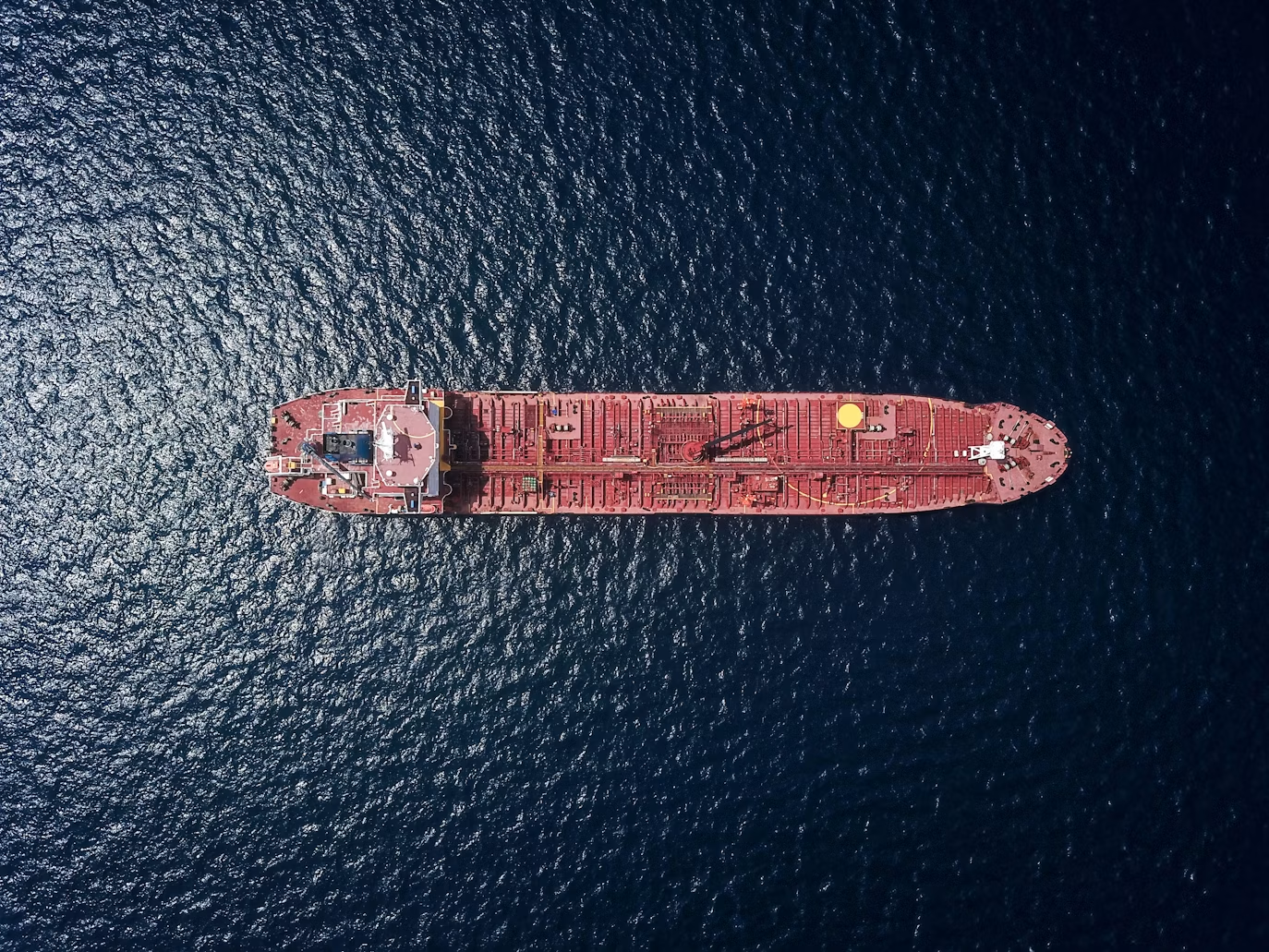
Since US and Israeli strikes on Iran in early 2026, the Strait of Hormuz — through which roughly 20% of the world’s oil supply passes — has faced repeated disruption. Brent crude crossed $100 per barrel almost immediately. The World Bank now projects energy prices will surge 24% in 2026, their highest level since Russia’s invasion of Ukraine. That number does not stay in the oil market. It moves into food prices, transport, manufacturing, and eventually everything you buy.
Here is what rarely gets discussed: this is not simply a military conflict. It is an energy chess match — and China is the real target. Iran had a 25-year oil supply agreement with Beijing, providing discounted crude in exchange for investment and security cooperation. Over half of China’s oil imports flow through the Strait of Hormuz. Disrupting that supply line puts direct pressure on the world’s second-largest economy. Meanwhile, the US captured Venezuela’s president Nicolás Maduro in January 2026 and took control of the country’s oil industry — cutting off the subsidised Venezuelan crude that had long supplied Cuba, and which also flowed onward to China, Russia and Iran. An executive order followed, threatening tariffs on any country selling oil to Cuba. The moves form a connected strategy: squeeze China’s energy supply from multiple directions simultaneously — the Gulf, Latin America, and the Caribbean.
China was already fragile before the energy squeeze tightened. Weak domestic demand, a property sector still deflating, and falling prices across the economy — the structural pressures were building before a single shot was fired. Add sustained energy disruption on top of that and the question stops being whether China slows, and starts being how far. For a world that built its supply chains around Chinese manufacturing, that answer matters to everyone. Bloomberg breaks it down.